THIS PAGE HAS MOVED TO WWW.ALFREDOFLORESPHOTOGRAPHY.COM

THIS PAGE HAS MOVED TO WWW.ALFREDOFLORESPHOTOGRAPHY.COM

www.alfredoflores.net honored by photography award

www.alfredoflores.net honored by photography award
Named to Washington Life magazine's Hot List September 2010

Thursday, September 13, 2007

Manu Chao
La Radiolina

http://manuchao.net/
On Tap Magazine September 2007

Manu Chao has always let his displeasure of U.S. foreign policy known, especially during his June DC-area show at Merriweather in front of 16,000. In "Tristeza Maleza" he speaks of infinite sadness due to the privacy-invading "Sr. Bush" and in "Rainin in Paradize" he thinks of Baghdad as non-democratic "because it's a U.S. country." These are songs of anti-globalization, peace and war, freedom and love, in English, Spanish, French and now Italian, using his trademark wondrous mix of global rhythms, with a new emphasis on rock. "Rainin" calls for calm and intelligence in a chaotic world with a fist-pumping, peppy upbeat catchy tune. In "Me llaman Calle" he hopes for love for streetwalkers in a beautifully melodic flamenco strum rhythm. "El Hoyo" is just plain fun, filled with sirens, screams, pulsating snare drums, rolling R's, chants of "hey, hey, hey," and "hoyoyo… oyoyo." CD release date is Sept. 4. — Alfredo Flores

Thursday, September 06, 2007

The "Fire Ant" This Time
Reviewed: Tego Calderón's El Abayarde Contra-Ataca

By Alfredo Flores
Posted: September 5, 2007 Washington City Paper
El Abayarde Contra-Ataca
Tego Calderón
Warner Musica Latina

Tegui Calderón Rosario, aka El Abayarde or simply Tego, has made inroads into American mainstream hip-hop and R&B in recent years, serving as the Spanish-language MC on remixed hits from the likes of Akon, Snoop Dogg, Usher, Fat Joe, 50 Cent, Cypress Hill, and Lil' Kim. So it was no surprise last fall when he tried his hand at releasing music he thought would appeal to an American audience—The Underdog/El Subestimado featured club-type dance hall, a heavy dose of synthesizers, and some English lyrics, particularly on tracks recorded with reggaeton hitmaker Don Omar and reggae star Buju Banton. He was the first reggaeton artist to sign with a major non-Latin label, and though the album didn't light up the charts, Rosario's still determined to crack the U.S. market. Last month he made his movie acting debut in Illegal Tender, and on the new El Abayarde Contra-Ataca ("The Fire Ant Strikes Back"), he's back to what got him international accl.. his unique mix of salsa, Afro-Caribbean rhythms, '60s slang, spoken word, socially conscious lyrics, and a great stage presence. Unlike the rough and lyrically dark The Underdog, Contra-Ataca kicks off with the happy-go-lucky "Alegría," which beautifully blends the chirps of birds and coquí frogs (the unofficial symbol of his native Puerto Rico), with sharp trumpets, a downtempo beat, and a message of spiritual tranquility. On the single "Tradicional a lo Bravo" ("Keep It Traditional but Cool"), he fuses Venezuelan merengue and Colombian vallenato rhythms, and Calderón's deep voice and smooth melodic flow (imagine a Spanish-speaking, octave-up Biggie Smalls) blends in perfectly. He uses a ton of Puerto Rican slang on the track, the better for him to spit a good game while trying to pick up a gal on the dance floor: "Calderón de nuevo a caballo/Déjate llevar por el bajo/Chula vámonos/Bien tradicional a lo bravo." ("Calderón once again on the move/Don't change a thing/Come on, beautiful, let's go/It's cool to be a traditional gal.") Undoubtedly influenced by his recent travels through the blood-diamond mines of Sierra Leone while filming the documentary Bling: A Planet Rock, "Ni Fu Ni Fa" ("Forget About It") makes great use of the tama, the "talking drum" often associated with the music of the Wolof and Mandingo tribes in West Africa. It's a fun, fast-paced song about what makes Tego happiest—women. Perhaps it took being away from his native country to make Calderón appreciate what made him such a sought-out artist in the first place. Whatever it was, he's reconnected with his roots without focusing on what Americans want to hear. His old but vibrant, universal sound connects, regardless of where listeners are from or what language they speak.

Friday, August 03, 2007

Neighborhood Focus: Adams Morgan
written by Alfredo Flores
Photo credit: Johnathan Quigley
On Tap magazine August 2007

Page 1 pdf
Page 2 pdf
Page 3 pdf
Page 4 pdf

Adams Morgan's history is as vibrant and colorful as its building's murals, the diversity among its people and in the many ways one can spend time there. Shopping and lounging in the afternoon, or nighttime clubbing and bar hopping in the evening among the dozens of restaurants and drinking holes on and near the 18th Street strip are what makes this the District's liveliest nightlife. Adams Morgan — also called AdMo, The Morgan, The Morg, AM, and many, many other acronyms — has its diverse roots embedded in its title. It's named after the integration of the all-black, and now defunct, Thomas P. Morgan Elementary School and the all-white John Quincy Adams Elementary School in the 1950s. Oh, how times have changed. Once AM was a fashionable suburb of DC with elegant apartment buildings and row houses built in the late 19th and early 20th centuries. Many of these same turn-of-the-last-century buildings are still in use today, as establishments that serve jumbo sliced pizza, host drag queen brunches, house cute boutique shops, and hold Jell-O wrestling matches and retro '80s dance-offs. I also hear that cheap beer and tasty martinis might be involved. So, let's get to it! Here's an Adams Morgan native's guide to his beloved neighborhood. TOP OF THE HILL: EAST SIDEColumbia Road from 18th Street toChamplain StreetPeople walking to AM from the Woodley Park-Zoo Adams Morgan Metro for the first time are usually looking for the first sign of nightlife. Welcome to the Adams Mill Bar and Grill — the first such sign before you reach the 18th Street strip. It's the home to many flip cup and beer pong tournaments upstairs, doggie happy hours on its large outdoor patio and lots of single young people looking to mingle indoors.Also, as you cross the bridge into Adam Morgan, you'll come across Mama Ayesha's, a family owned and operated restaurant on Calvert that features truly home-cooked Middle-Eastern food.Notable Columbia Road spots include Chief Ike's Mambo Room — a neighborhood haunt where DJs spin reggae, dancehall, soul and funk and patrons can gulp down $2 PBRs; and Churreria Madrid — tasty paella, churros and bistec. Pasta Mia has epic long lines, but well worth it for cheap but incredibly tasty Italian dishes, 25 in total, most notably green fettuccine with porcini-mushroom sauce and cheese tortellini with tomato-cream sauce. If you're into bicycles, City Bikes has a great selection of high-end bikes and their mechanics are among the city's best. TOP OF THE HILL: WEST SIDEColumbia Road from Belmont Road to18th StreetIf you were to hang a right at Columbia Road at the top of the strip you'll hit one of the longtime tenants of AdMo — Habana Village — arguably the best salsa joint within city limits. Walk inside and it's a blast from the past to ol' Habana: older guys in guayabera shirts, younger gals in short skirts and flashy tops twirling around the old wooden floor and tropical colored walls. While it might be intimidating for newcomers, fear not — just grab a mouth-watering mojito and arrive early for salsa lessons: Wednesdays through Fridays, starting with beginner's lesson at 7:30 p.m., intermediate at 8:30 p.m. One of the best daytime options after a night of salsa dancing (or however you choose to spend your night in AM), is to take part in Perrys' famous Sunday drag queen brunch. Drag queen divas — many of the same ones you would find at the 17th Street drag queen high heel race during Halloween week — serve you in some of the most outlandish outfits you'll ever see. As they sashay back and forth with food, they put on quite a show by shamelessly flirting with customers of all genders — male, female, and not-quite-sure. To top it off, their music selections are on full volume and over the top — think Donna Summer, Whitney Houston and the Eurythmics. Perrys also is home to one of the nicest rooftop decks in the area and is noted for its sushi selection. On the same side of the street is one of DC's best running shoe stores — Fleet Feet, owned by the proud parents of Mayor Adrian Fenty, Phil and Jan. It's been around since 1983, has a knowledgeable staff and allows you to 'test run' their shoes.For tasty Peruvian-style rotisserie chicken and delicious Lomo Saltado — the national dish of Peru (steak strips with specially seasoned French fries)— be sure to check out Granja de Oro. A few doors down is Grill From Ipanema, home to authentic Brazilian cuisine including Bahia-style stews, carne de sol (flank steak) and delicious caipirinhas to wash it all down. TOP OF THE 18TH STREET STRIP18th Street between Columbia andBelmont roadsA popular tourist destination — you've probably heard of this place from features on Playboy, Stuff and Wild On!, as well as DC locals who love blues, folk, jazz and bluegrass music and soul food — is Madam's Organ. It's hard to miss. A "Sorry, we're open" sign welcomes you, a busty "Madam" mural covers its outside wall and has the motto "Where the Beautiful People go to Get Ugly!" Madam is well-known for its redheads drink for half-off Rolling Rock special, and if you like mounted animals on the wall, mismatched furniture, local eclectic pieces of artwork and just a general crazy vibe that sets the Madam apart from most AdMo places, drop by. A very similar concept, but much more chill, can be found at Brazilian bistro Bossa — known for its massive sky-high candles, local photographer showcase, smooth Latin jazz, downtempo DJ sets, and live salsa bands. A sometimes overlooked, but good date place with its small patio, comfy couches, music set at a low enough volume to not interrupt conversation, and a pretty solid mojito to go along with moderately priced tapas and other Latin fair. Across the street is one of the most original concepts for a bar: aquariums with exotic fishes, and lots of them, hence appropriately titled The Reef. It's sort of an oceanography lesson come to life with its coral reef-like dark walls on the first level and the beautiful blue and green hues and spacious second level where the aquariums are impeccably kept with vibrant colored fish. It's Adams Morgan's largest bar, with a huge rooftop deck with a terrific view of Adams Morgan, and has one of its finest beer on tap selections — 16 total, and always rotating. Be sure to try The Reef's signature Belgium Sunrise — a deliciously tart mix of Allagash White layered on top with Kasteel St. Louis Framboise. Food-wise it's all free-range meats and poultry, organic produce and sustainable fish — all very good and at a fair price, particularly their bison burger hemp seed hummus. In the mood for something else? Try the Angry Inch, a bar full of energy. For great late-night nosh try Julia's Empanadas, a pretty good bang for the buck, and the notoriously famous Adams Morgan jumbo slice pizza; which is claimed to be sold at numerous locations through the strip (even as far south as U Street), but only one can boast it's the original and best — Pizza Mart. For higher-end late night bites there's The Diner and Tryst Coffeehouse and Bar — sister restaurants that share the same owner and are located two doors from each other. Tryst is a jewel of a coffeehouse/bar with some of the funkiest couches and best pastry and coffee selections in the city. The DINER has a similar menu and drink selection, with more chairs than couches, brunch-type food served 24/7 and a pretty good Bloody Mary. Around this area a couple of newer spots — 18th & Red and Grand Central. Both have a good reputation of being top places to go. Hungry for something different? How about Jyoti Indian Cuisine, decorated with carefully chosen items from India, the food is made with authentic spices from India kept warm served on a Kadai with a candle underneath.One of the cooler boutiques in the city also is on this block — Shake Your Booty. Booty has unique and rare footwear from David Aaron, Rampage and Hype. Another can't-miss mural while strolling down AM is the one that replicates Parisian artist Toulouse-Lautrec's portrait of singer Aristide Bruant — an unmistakable Adams Morgan landmark with its yellow backdrop and Bruant's signature black hat and vibrant red scarf. The mural envelopes the aptly named Cafe Toulouse, a quality French bistro that has blues and jazz music Thursday through Saturday. In contrast are the skulls hanging on the wall at DC's premier biker/Goth bar Asylum. For the past 10 years it's held the infamous Miller High Life Countdown on Saturdays, with High Life going for a quarter at 5 p.m. and going up 50 cents every hour. Also check their online calendar for their next apple sauce, pumpkin pie or Jell-O female wrestling contest; and bikini motorcycle washes. Speaking of Jell-O — another bargain is the $1 Jell-O shooters when the big light bulb lights up inside Millie and Al's. Another deal is the "when it rains, it pours" special at Toledo Lounge — i.e., rainy Mondays, Tuesdays and Wednesdays get you $2 draft beers. Something more upscale? Try the quality martinis and dishes at sister restaurants Chloe and Saki — the first serving a delicious Jumbo Lump Crab Cocktail and tasty mussels; the latter serving $1 negri and half-priced salmon teriyaki during happy hour. There's also the Left Bank, a fine French Restaurant. And to get a sports fix, visit Ventnor Sports Cafe.Another pair of sister establishments — Amsterdam Falafel Shop and M'Dawg Haute Dogs — sit right across the street from one another. Amsterdam is the best falafel in town because you make it. They give you a pita pocket, and it's up to you what 20 toppings you want: beets, cabbage, herb sauce, eggplant puree. M'Dawg boasts the $20 Kobe Bryant, the "Bentley" of all dogs, made with exquisite Wagyu beef, a Kobe-style beef known for its tenderness, marbling characteristics and juiciness (and hefty $150/pound price tag). Sister clubs Felix and Spy Lounge both have lines that stretch down 18th Street on weekends, and both feature sleek interiors reminiscent of Miami and New York nightclubs. Spy is a much smaller lounge, and somewhat more exclusive, while Felix has live funk or jazz music on the weekends. Be sure to try the Felix Breeze (Stoli Strasberi with strawberry puree), Mango Caipirinha, Felix Spring Punch (Grey Goose and berry liquor) and the Lotus (Absolut Vanilla and Lychee Puree). With a martini lineup like this, it's no wonder these two lounges host DC's best James Bond-themed parties. BOTTOM OF THE 18THSTREET STRIP18th Street between Belmont Road andFlorida Avenue While the top half of the strip can boast the vast majority of AM's restaurants and bars in a very compact space, there are some hidden treasures in the more spread out bottom portion. Before continuing down the strip, visit Stetson's, a nice neighborhood bar. Bourbon found a niche that previously had been missing in Adams Morgan: a hip bourbon and spirits bar. To no surprise, this bar has 70 kinds of bourbon in stock, including dozens of Kentucky bourbons and Tennessee whiskeys; as well as a dozen wines and a pretty good selection of draft and bottle beers, including Magic Hat and Blue Moon. An anchor of AM at 18th and Kalorama, Soussi has a homey, lived-in feel to it, even though it's been in existence for only five years. It has influences from North Africa, France and Belgium in its vibe, food, hookahs and drinks. Popular dishes include Mahi-Mahi, Lamb Couscous, Steak Pommes Frites, and Jamal's Penne served with white wine butter. Also be sure to check out L'Enfant, a European-style cafe/bar with a large patio. A different type of homey-feel is the authentic décor and cuisine of Casa Oaxaca — a new addition to AM and one of the very few authentic Mexican restaurants in the city. Be sure to try one of their seven moles, the cooked sauces that the Oaxaca Mexican region is best known for. Yet another place with a homey-feel, albeit because of the fact it's been there for a decade and not much has changed since, is the Common Share — home to $2 beers, pitchers for a few bucks more, and the best martini special you'll ever find — $2 on Saturdays before 10 p.m. Also in the area is Bobby Lew's, a new place that has drawn its own following for being a cool neieghborhood bar. If you're looking for an early start to the weekend, few places can match the fun that is the '80s Dance Party in the upstairs "Heaven" portion of Club Heaven and Hell on Thursdays. Get there early for the buckets of Corona and tequila shots combo, and to avoid what is usually a pretty long line to get in. Speaking of retro, albeit slightly earlier than the '80s, is Meeps & Aunt Neensie's Fashionette — one of DC's longest-running vintage shops, with particular focus on styling from the '40s through the 1970s. There also is a fair amount of "local specific" finds from local designers, such as a 'Debbie Does DC' T-shirt. Well there you have it, this has been one man's version of his AM. I'm sure I'll see you in AdMo soon! For more info on Club Heaven & Hell, see this month's bar of the month feature: http://www.ontaponline.com/view_article.php?article_id=10747 For more info on Madams Organ, see this month's venue of the month feature: http://www.ontaponline.com/view_article.php?article_id=10748

Thursday, July 05, 2007

A street beyond reggaeton
Calle 13
Article published Jul 5, 2007 Washington Times

Calle 13's lead rapper-Rene Perez (aka Residente) and keyboardist-programmer and half-brother Eduardo Cabra (called Visitante) have given the burgeoning reggaeton genre a much-needed shot in the arm, winning the best urban artist award at last fall's Latin Grammy ceremony. Some have suggested that reggaeton (a popular urban mix of hip-hop, Latin beats, reggae and rap) was becoming stale, with predictable artists monotonously rapping about hooking up, getting paid, sex and food. But why stray from a winning formula? Because Calle 13 — so named because while growing up, Residente would often visit Mr. Perez on 13th Street in San Juan, Puerto Rico's middle class Alto Trujillo neighborhood — never considered itself a reggaeton band. "We don't have a particular genre to call our own, but we're definitely not a reggaeton band," Residente says in Spanish during a phone chat from Puerto Rico. "This is not hip-hop. We're rock, because that allows us to do what we want to do in our very own style." Residente holds a master's degree in fine arts from the Savannah College of Art and Design in Georgia, while Visitante has a bachelor's degree in accounting. In contrast to the bling-happy norm for reggaeton stars, Neither wears gold medallions, with Residente usually comfortable in a white wife-beater and jeans, and Visitante in a beret and funky indie rock shirts. Their musical idols include Whitesnake, Poison, Ruben Blades, Eminem and one of Puerto Rico's original reggaeton stars, Tego Calderon. The varied influences help explain Calle 13's genre-busting inventiveness, which includes, for example, a clarinet solo in their breakout smash hit "Atrevete-te-te" — which dares intellectual girls to "come out of the closet" and "go hyper," let loose. They also mix in rock, electronica, cumbia and rap with lyrics that are funny, political, even scandalous. "La Jirafa" uses heavy percussion in the group's search for the "one," while the sarcastic and overtly sexual "Se Vale To" uses '80s-style synthesizers. The group's newest hit, "Tango del Pescado," adds tango accordions to reggaeton beats, with a swaggering Residente rapping to a bride-to-be: "I'm coming straight from hell/Your daddy is more square than a notebook and he can't comprehend my modern language." Although not the devil himself, Residente does have a mischievous smile and a cocksure stage presence. He calls this song, "progressive tango — a super cool mix, a theme we really loved." Calle 13 performs Wednesday at the 9:30 Club (www.930.com). Doors at 7:30 p.m. — Alfredo Flores

Friday, June 15, 2007

Daddy Yankee takes mainstream turn
By Alfredo Flores Published June 15, 2007 Washington Times
Daddy Yankee
El Cartel: The Big Boss
El Cartel Records/Interscope

King Daddy. El Jefe. The Big Boss. El Cangri. These are just some of the nicknames Raymond "Daddy Yankee" Ayala has given himself over his spectacular 13-year ascent from the underground Spanish hip-hop scene of Barrio Obrero, Puerto Rico, to undisputed leader of reggaeton — an infectious mix of dance-hall, reggae, Latin beats and rap that's sweeping across nightclubs and radio stations throughout the Americas, Europe and Asia.With his latest effort, "El Cartel: The Big Boss," Daddy Yankee, 30, tries to claim yet one more title for himself — pop star.DY's "Impacto" remix with Fergie of the Black Eyed Peas is likely to become a summer club banging jam that will further propel Yankee (a Puerto Rican slang term used for someone big in what he does, a Big Daddy) into mainstream popularity. It doesn't hurt that the futuristic vocoder beat (think Dr. Dre/2Pac's "California Love") used by hit-making producer Scott Storch is just so darn catchy.For those who can't follow DY's trademark melange of rapid-fire Spanish, Tony Montana broken English and Spanglish slang, he slows it down in the chorus with "You like the way I do it?" And Fergie replies, mimicking Yankee's Spanish-accented emphasis on the word "do," with "I like the way you duuu it."DY has shed the gangsta image of a few years back when he had hits including "Gangsta Zone" with Snoop Dogg and remixes of "Gasolina" with Lil Jon, "Rompe" with Lloyd Banks, and "Machete" with Paul Wall. On "El Cartel" it's out with the rappers, in with another Black Eyed Pea (Will.I.Am, who raps "Blacks like Latins and Latins like blacks/Let's start (loving)/ What's happening," in the Caribbean-tinged party track "Plane to PR"); a Pussycat Doll (Nicole Scherzinger on the love song "Papi Lover," with its clever uses of flute and hand cymbals); and the fly R&B stylings of Akon on "Bring It On," on which Yankee's smooth rhymes and melodic keyboard hook and Akon's amazing singsongy flow, make for a killer combination.The lengthy album — 21 tracks clocking in at slightly less than 80 minutes — has a handful of songs that could have been left off — particularly the cheesy "Who's Your Daddy" and the extremely disappointing duet with reggaeton star Hector "El Father" on "Tension." Still, there are several standout tracks, most notably DY's salsa and mambo-based songs such as "Corazon Divina" and "Me Quedaria," his aggressive Jay-Z-esque world takeover "Mensaje del Estado" and his excellent English-language collaborations.

Sunday, June 03, 2007

WHAT A COMBO
MANU CHAO &
THIEVERY CORPORATION
PERFORM AT ME
RRIWEATHER
By Alfredo Flores
Photo Credit Andrzej Liguz
On Tap Magazine June 2007


A unique musical friendship was formed last summer at Lollapalooza in Chicago's Grant Park, where more than half of the 100,000 people in attendance rocked out to headliner, hometown hero and R&B superstar Kanye West. But based on the near-riot-like soccer match atmosphere and deafening decibel levels from Manu Chao's fans — a fourth the size of West's audience — at a nearby stage, you'd think that this third-billed global pop icon was headlining the festival. Washington, D.C.'s own internationally renowned downtempo electronica DJ duo of Eric Hilton and Rob Garza — better known as Thievery Corporation — performed right before Chao, and had the best view for his remarkable 90-minute set, filled with chants of "Ole, Ole, Ole", mosh pitting, slam dancing, head bobbing, and just plain general chaos that has become a trademark for just about all of the 45-year-old Chao's live performances. "We've been longtime admirers of Manu's music and how he goes about it," said ESL Music label manager Mat Whittington, who manages Thievery. "At Lollapalooza, he was phenomenal. His live show is amazing." But little did they know that after seeing and then hanging out with Chao after their respective sets that Thievery would have the chance to help out one of their favorite musicians. Chao, now in the middle of his 22-city and most extensive U.S. and Canada tour to date, was having trouble securing a good D.C. area venue earlier this year, until I.M.P. Productions, ESL Music and Thievery Corporation came up with an interesting concept. Thievery is now hard at work on their new album and had no plans on touring this summer, but that changed when Whittington got a call from his friend Tom Chauncey — Chao's agent. "We knew he was touring this summer, and they were having a little difficulty finding a good space for Manu to play," Whittington said. "The people at I.M.P. then came to us about doing a co-headline with Manu. There was no way we could say no." ESL Music — named after Dupont Circle's famed Eighteenth Street Lounge, which was founded by Hilton and is where Thievery got their start —also is home to DJs Ursula 1000, Nickodemus and Thunderball. They — along with bossa nova star Bebel Gilberto, who has worked with Thievery in the past, most notably in the remix of her hit "Cada Beijo" — will be part of the house, reggae, and other international-tinged music in the "A Day in the World" festival at Merriweather Post Pavilion this month. For Thievery — known for spearheading the sophisticated "downbeat generation" and their mastery of the "outernational" sound that fuses a plethora of world music with electronica (think bossa nova, easy listening, Latin dub, roots reggae, rock, Middle Eastern beats, jazz, soul; guest performers on horns, percussion and sitar), and have worked with Madonna, Gus Gus, Stereolab and rock legends Perry Farrell, The Flaming Lips and David Byrne — this music festival provides a unique opportunity to play alongside musicians of somewhat variant styles. "I think it's a meeting of like minded musicians," Whittington said. "And while the music might be a little bit different, I think the bands have a similar outlook on the world. And this meeting makes a lot of sense, really." Both Chao and Thievery are lauded for their willingness to challenge themselves with new music genres. Chao is an interesting character, to say the least. He has been called somewhat of a pop musical messiah, but also is considered an activist artist who has not mellowed with age. Even though he is now middle-aged, gray haired, short and super slim, suffering from tendonitis on his ankles, one would be amazed at the sheer energy he and his crack raucous band Radio Bemba Sound System — named after a slang term meaning gossip or word of mouth — brings to their sold-out live shows of tens of thousands around the world. Chao — Paris-born and Barcelona-dweling, and whose first new studio album in six years comes out this September — also is the personification of a human pogo stick, tendonitis be damned. He sets the tone for many of his reggae-influenced songs with a downbeat to start, many in the audience swaying back and forth; and then, in an instant, he strikes that one cord on his guitar and all the house lights light up the stage, in a cue that lets everyone know go ahead, go nuts. As Chao jump kicks and hops on stage, and Radio Bemba — with its drums, timbales, backup guitars, keyboards and mega bass — go into pummel mode. His 2001 album "Proxima Estacion: Esperanza" topped the European charts and was named one of the best albums of the year by Rolling Stone. His solo debut "Clandestino" remains one of the best-selling albums in French music history, with more than 2.5 million copies sold to date. Garza is a huge Chao fan. He's has been listening to Chao since he was 18 — back when Chao was the frontman for the French rock group Mano Negra. Like Chao, he also often sports a beret, but shares a lot more in common than headwear.Along with Hilton, the duo has been "undisputed masters of cool" — as one fan called them — for 12 years now, is best known for their albums "The Richest Man in Babylon," "The Mirror Conspiracy" and "The Cosmic Game," and has sold over half a million albums. This is a staggering total for DJs, who make their reputations in clubs, not necessarily in studios — like the one in Adams Morgan that ESL Music studios calls home. Like Chao, they perform in front of packed crowds of thousands of people all throughout Europe, even playing one time for an unheard of 30,000 people in Portugal. So what's the best part of getting these "like-minded" musicians on one stage, for what's expected to be more than 15,000 people at Merriweather? "All of them are people that we would consider, you know, friends," Whittington said. "So, that really would be the push behind the show, putting people together that like each other and would be a good fit musically for a day-long type of festival."

Tuesday, March 27, 2007

Latin sounds
Aterciopelados

Published March 15, 2007 Washington Times

A lot has happened since 2003, the last time lead singer Andrea Echeverri and her Colombian rock band Aterciopelados came to the Washington area. She took time off to be with her newborn daughter, had a stellar debut solo album and is now back touring the U.S. to promote "Oye," the group's critically acclaimed new LP. She still fondly remembers the night at the Kennedy Center's packed Millennium Stage when the Latin Grammy winners (who have sold out numerous major venues throughout Latin America and Europe) performed free for several thousand lucky fans. "They were incredibly warm," Miss Echeverri said earlier this month in soft-spoken English during a phone interview from her home in Bogota. "A Puerto Rican couple invited me to their cafe," she recalls, adding that she still thinks about the funky crowd and all the "amazing hairstyles" in the audience. This is the sort of fuzzy, happy vibe that Aterciopelados (Spanish for Velvety Ones) has been putting out for years. Their music has gone from electronica to funk, to pop, to more traditional rock and roll. Through it all, the band has managed to blend traditional Latin rhythms such as bossa nova, vallenato, sambuco, cumbia and salsa while singing on range of topics from violence and corruption in Miss Echeverri's homeland to abusive relationships.
In the new album, she speaks about the "hypersexualization" of society in "Oye Mujer" ("Hey girl"), a song that makes women "forget how powerful and beautiful we really are." There are several songs with lighter moods in the new album as well. "Complemento" ("You complement me"), for example, is an upbeat love ballad about her husband, with a catchy hook and melodic use of South American panpipes.
"La Pipa de La Paz" ("The Pipe of Peace") the hit song from their 1996 debut album "El Dorado" features panpipes, heavy percussion and deep, sultry vocals from Miss Echeverri, who talks about people doing the rain dance in a paradisiacal setting while passing along a peace pipe — a perfect example of her sometimes spacey persona. Aterciopelados performs Monday at the State Theatre, 220 N. Washington St., Falls Church (http://www.thestatetheatre.com/) with D.C. Latin rock group Stone Gato as the opening act. Doors open at 7 p.m., with showtime at 8:30 p.m. — Alfredo Flores

Monday, March 19, 2007

Mana delivers some heat
By ALFREDO FLORES
THE WASHINGTON TIMES
Published March 19, 2007

What a great day to be from Guadalajara. Less than 24 hours after their beloved Chivas of Guadalajara faced D.C. United in a rare East Coast visit, proud natives of that city turned out Friday to see Mana, the biggest Mexican rock band of them all at the sold-out Patriot Center. It made 8,000 people forget about the frigid weather and sleet outside -- at least for two hours. Seeing Mana perform live was like being in a Latin music time capsule of sorts. One can instantly recognize the big-hair look and arena rock sound their genre made famous in the late 1980s with such ballads as "Rayando El Sol" ("Lining the Sun"). Lead singer Fher Olvera, wearing a black suit jacket and striped black and white pants, urged the swaying crowd to sing along, cigarette lighters in hand, with the chorus "O-e-ooo" as he paced the stage shaking his long, flowing curly brown hair. Their hit "Clavado En Un Bar" ("Stuck to a Barstool"), which set the standard for Latin pop-rock of the mid-1990s, features a singalong chorus and pulsating guitar riffs. As expected, it ignited the crowd, especially the women (a few brave souls wore only miniskirts and tank tops) holding on to their boyfriends as they screamed, shouted and danced in the aisles. Soon, however, the performance took a dark turn when the band lit candles on stage, changed into spooky cloaks and capes and donned Jason and Leatherface Halloween masks to sing the emotional environmental awareness song "Donde Jugaron Los Ninos?" ("Where Will the Children Play?"). The concert was filled with breathtaking special effects that included smoke machines, gigantic pyrotechnic fireballs during powerful guitar riffs, a spinning hydraulic mini-stage for drummer Alex Gonzalez and a cascading waterfall in front of the stage. In the song "Sigue Lloviendo el Corazon" ("The Heart Keeps Raining"), Mr. Olvera showed off his deep soulful voice as he reached out to wet his hand. Mana was the first major band to sing rock en Espanol in 1986 -- back when other Latin bands only did English-language rock covers -- and to make it commercially successful to the tune of three Grammy and four Latin Grammy awards, 22 million albums sold and more than 12 million in attendance at concerts leading up to their U.S. "Amar Es Combatir" tour. There seems no end in sight for the group's dominance in a genre it helped create.

Friday, October 27, 2006

Salsa megastar Rivera has fans dancing in the aisles
By Alfredo Flores
THE WASHINGTON TIMES
Published November 27, 2006

They came in droves and waited patiently for hours for the show to start. Then, just before 1 a.m. in the Washington Hilton's International Ballroom yesterday, finally, the trademark chant began, "Jeeer-ry, Jeeer-ry, Jeeer-ry." While it may have sounded like the beginning of a Jerry Springer show, if you listened closely there was a distinct Spanish accent to this particular Jerry chant -- in this case for Puerto Rican salsa megastar Jerry Rivera. In a scene reminiscent of New York City's famed Copacabana salsa club, the Hilton provided Mr. Rivera with the perfect setting to perform not only in front of a packed house, but also for a wide variety of fans. Those with deep pockets sat up front at VIP tables, wining and dining before and during the show. Meanwhile, younger devotees danced the night away either between the narrow gaps of the tables or on the huge dance floor. The ruggedly good-looking singer, sporting jet black spiked hair, a tight muscle shirt and matching black pants, has developed a baby-faced golden-boy mystique as a young "prince of salsa" -- enough to get him named one of People magazine's "50 Most Beautiful People" and land roles in the American movie "I Like It Like That" as well as several Spanish telenovelas, television soap operas. Mr. Rivera has achieved much success in his nearly 20-year career, most notably for his 1992 album "Cuenta Conmigo (Count on Me)," which won three Platinum Record awards in the U.S., Puerto Rico, and Colombia and became the No. 1 selling salsa album of all-time. It contains the powerful "Como El Nuestro (Like our Love)," whose distinctive horn rhythm was sampled in the chorus of Shakira's megahit "Hips Don't Lie." Mr. Rivera, 33, did not fail to project the warm, friendly manner that sets him apart from his blander, monotonal elders in the romantic salsa genre. Several ladies in the audience swooned at his Rivera's love ballads, including "Esa Nina (That Girl)," "Me Estoy Enloqueciendo Por Ti (Going Crazy for You)," "Dime (Tell Me)" and "Como un Milagro (Like a Miracle)." Although his vocals were sharp, his microphone tended to give static feedback on longer notes. Perhaps because he was forced to play solo instead of being one of a twin-bill of Puerto Rican performers (merengue star Elvis Crespo was unable to catch a flight to Washington after a concert in Venezuela), Mr. Rivera did a bit too much talking with the audience and took his time in between songs, most likely a tactic used to extend the length of the show. The mood of the performance, outside the ballroom, also heated up. At around 12:45 a.m., when the announcement was made that Mr. Crespo would not be able to perform, several of the concert-goers pushed and shoved while demanding a full refund. Several officials from the local event management company, Oscar's Production, had to be taken away by security for their safety. The evening was also marked by the sort of chaos one might expect at Mr. Springer's show when several enthusiastic female fans mobbed and then mercilessly kissed and hugged the singer onstage before being whisked off by beefy security guards. Mr. Rivera, however, did his best to bow to the wishes of the audience, posing for countless pictures, and even dancing with a couple of his fans.

Monday, October 23, 2006

Reggaeton hits its stride
Don Omar

By Alfredo Flores
SPECIAL TO THE WASHINGTON TIMES
Published October 23, 2006

"Reggaeton" is one of those buzzwords thrown around in the music industry as an up-and-coming genre, with some of the heavy hitters in mainstream hip-hop jumping at the chance to collaborate with their Spanish-language counterparts. Ask the average American pop-music listener about it, and it's tough to get names of reggaeton hits -- a mix of hip-hop with Caribbean and reggae beats -- much less the stars.That may be changing, thanks to the ambitious plans of one Don Omar. The Puerto Rican megastar christened the Verizon Center on Friday night with its first-ever reggaeton concert, featuring an elaborately designed, Broadway-esque stage full of pyrotechnics; dozens of scantily clad, mohawked, krumping dancers; violin and piano players; and smoke machines -- in short, all the bells and whistles one would expect from any big-time arena concert. By packing the lower bowl of the massive arena, by far the largest indoor concert venue in the area, Don Omar made a huge splash that should affect not only his nationwide popularity, but that of the burgeoning genre as well."People don't realize just how big the Hispanic culture is in D.C. until they have special events that can get everyone who loves this music together in one location," said audience member Victor Colindres, a fellow Puerto Rican who lives in Suitland. That was the sentiment of many in the diverse audience, who hailed from Guatemala, Mexico, Brazil, Honduras, El Salvador, Peru, Bolivia, Panama, the Dominican Republic and various other nations as indicated by the flags being waved in the rafters at the Verizon Center.What they saw was unlike any previous local reggaeton concert. It started with "the Don" sporting his trademark dreadlocks and a post-apocalyptic black armor (think of those scary Oakland Raiders fans with the spiky shoulder pads, but times 10) before he changed into a white tuxedo with matching cape and gold staff, followed by a white T-shirt with a large custom platinum medallion and baggy jeans.He may not be the best-known reggaeton artist -- that title belongs to Daddy Yankee, whose songs ("Gasolina," "Rompe") get regular airplay on MTV and urban hip-hop radio stations. However, Don Omar -- born William Omar Landron in San Juan -- is arguably a close second, and his collaborations with P. Diddy, Ja Rule, N.O.R.E., J-Lo, Fabulous, Fat Joe and others have built up his stateside reputation in recent years.With a new platinum-selling album, "King of Kings," topping the charts, he began his 17-city U.S. tour last week with stops at reggaeton meccas -- Madison Square Garden in New York and American Airlines Arena in Miami -- as well as medium-size Hispanic markets such as Washington to prove he can hang with the big boys.Don Omar, who grew up singing gospel as a child, has perfected his soulful piano ballads, such as "Angelito," and mixed it up with dance-hall reggae in "Belly Danza" and "Salio el Sol." There also are various songs that take cues from such Puerto Rican musical traditions as bomba and guaguanco (a form of rhumba), Dominican bachata ("Pobre Diabla") and gangsta rap ("Conteo"). The biggest ovations here -- including piercing shrieks from younger female fans -- were for Don Omar's megahits that combine it all: "Reggaeton Latino," "Dile" and "Dale Con Dale," plus the guest duets with reggaeton superstar Tego Calderon ("Bandoleros") and Romeo of the bachata crooner group Aventura ("Ella Y Yo")."I don't know what it is, but it's something about Don's raunchy voice; I just love the way it sounds," said Jackie Garcia, an Alexandria resident of Salvadoran descent who had persuaded seven of her friends to fork over $68 to $98 for the three-act extravaganza."The Wizards play here; the Caps play here," exclaimed fellow Salvadoran Carlos Henriquez, who had made the trek from Warrenton, Va. "This is truly an event. This movement of reggaeton is going out loud. Even gringos like this joint."He was right. It's isn't just Latinos who have joined the craze. Mr. Henriquez's Hawaiian friend Mookie Cabrerra, a non-Hispanic living in Manassas, said she thought reggaeton was "the best beat to hear all the time."With the Don Omar concert living up to its lofty goals, the future of reggaeton is looking bright. Melissa Fuentes, a Puerto Rican living in Fairfax, has a 13-year-old niece "who absolutely loves" the music. All her friends do, too, and "they'll be 23 like me in 10 years. This reggaeton thing is going to go strong for a long time."

Friday, October 06, 2006

'Don Juan' revenge sweet
By Alfredo Flores
THE WASHINGTON TIMES
Published October 6, 2006

Don Juan is up to his old tricks again. After suavely seducing the women in his native Spain, he's now gone off to Belgium in search of new conquests in the U.S. premiere of "Stripping Don Juan" at the Gala Hispanic Theatre. Little does he know that an old Spanish flame he once promised to marry -- only to leave her heartbroken -- has followed him to exact her revenge. Originally written in the 17th century by Ana Caro, one of the rare women playwrights of Spain's Golden Age, this is an unusual and funny look at how a female lead character goes to extreme measures -- traveling from Seville to Brussels and dressing as a man to gain access to Don Juan's exclusive inner circle -- to strip the cavalier macho man of his dignity, honor and pride. Playing the dual lead character of Leanor/Don Leonardo (wearing a black jockey-style coat while mimicking men with her deep, fake-manly voice), Gabriela Fernandez-Coffey does a good job of keeping Leonor's emotions in check, while trying her best to stay in character as "male" Leonardo, a womanizer. Leonor's goal is simple: Kill the man who scorned her, or win him back. Along with her servant, Ribete (Luis Simon), she arrives in Brussels as a guest of Don Fernando de Ribera (Carlos Del Valle), who is really her brother, but believes his male guest is his cousin. There, she meets with her target, Don Juan, played to perfection by Mel Rocher, whose thick Sevillian accent, regal purple suede coat and extremely large ego bring one of the world's great seducers convincingly to life. In Belgium, Don Juan is already in hot pursuit of the voluptuous Estela (Cynthia Benjamin). He immediately becomes a hero after saving Estela and her cousin Lisarda (Julieta Maroni) from an attack by bandits in the outskirts of Brussels. The city is represented by a beautifully decorated set of lush forest, gloomy clouds and large trees that double as balconies in later scenes of the play. Don Juan soon gets a taste of his own medicine when Estela loses interest in him and begins flirting with Don Leonardo, who has had to compete for Estela's attentions with two additional, actual men -- Fernando and Prince Ludovico of Pinoy (Timothy Andres Pabon). (Estela picks Leonardo after he woos her with lines like, "Your two eyes like two suns that imperiously display their light amongst lightning bolts and arrows.") Later, in the garden, Don Juan and Leonardo prepare for the critical final fight -- with switchblades. Fernando learns that Don Juan has dishonored his sister, and loses all respect for his once-trusted friend. Don Juan, scared for his own safety, proclaims he still loves Leonor. Don Leonardo steps away from the fight, goes into the woods, quickly changes clothes, and comes back immediately as -- guess who? -- Leonor. Ultimately, the complications are tidily resolved in a happy ending for alI -- a fun, if slightly cheesy, way to wrap up a thoroughly enjoyable play. *** WHAT: "Stripping Don Juan" ("Valor, agravio y mujer"), a 17th-century comedy by Spanish playwright Ana Caro Mallen de Soto, directed by Hugo Medrano WHERE: Gala Hispanic Theatre-Tivoli, 3333 14th Street NW (play in Spanish, with English surtitles above and below the stage) WHEN: 8 p.m. Thursdays through Saturdays, and 4 p.m. Sundays. Through Oct. 22 TICKETS: $20 to $34. PHONE: 800/494-TIXS WEB SITE: www.galatheatre.org MAXIMUM RATING: FOUR STARS

Monday, September 04, 2006

Los Amigos take club by electrofunk storm
By Alfredo Flores
Published September 4, 2006

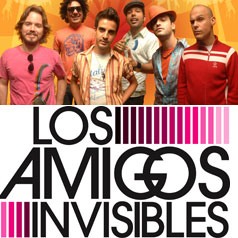
It was a new album and a new venue, but the same old crazy fun when the Venezuelan electrofunk group Los Amigos Invisibles celebrated the release of its new album "SuperPop Venezuela" with a three-hour Latin dancing, booty-shaking performance at the 9:30 Club Friday night -- the band's first appearance there after years of sold-out shows at the smaller Black Cat. It was apparent from the start that much of the audience had been to an LAI show before. Many sported Amigos T-shirts, others wore disco-era clothing, and those who didn't dress the part made sure to leave their inhibitions at the door and were prepared to dance their hearts out. The concert started with the smash single "Amor" -- an appropriate theme to the night. "Amor for the Spanish, amour for the French. Love in any language always means the same," sang lead singer and self-proclaimed Latin playboy Julio Briceno (aka "Chulius") shaking maracas in a military-style bucket hat and green shirt. Love was indeed in the air as couples paired off on the spacious dance floor, dancing salsa to Latin-tinged electronica, cumbia, rock, soul and funk beats. Many of the ladies crowded to the front of the stage to get a better look at the handsome lead singer, joined up front by lead guitarist Jose Luis Pardo (appropriately dubbed "DJ Afro" on account of his hair style and duties as the opening act's disc jockey); and the suavely goateed bass guitarist Jose Rafael Torres (aka "Catire"). Now in their 15th year together, the group has come a long way from its much darker grunge rock roots in native Caracas -- a city that, like the band, embraced various types of world music when international investment in the nation's oil started to boom in the 1970s. It's had its fair share of accolades -- including a Latin Grammy nomination for the 2004 release "Venezuela Zinga Son Vol. 1," which loosely translates to "The Largest Love-making Session in Venezuela." Despite fame, LAI has always chosen to play in smaller venues to be closer to the audience. Mr. Briceno's energy, passion for his craft and love of his adoring fans was apparent from the start. During most of the concert he pointed, winked and flirted with female fans, holding his microphone sensually close to his lips while belting out sexy songs such as "Cuchi Cuchi" ("Booty Booty"). While the lyrics were raunchy at times, the bass-driven beats -- helped by keyboardist Armando "Monsieur Armand" Figueredo, Mauricio "Maurimix" Arcas on the congas and Manuel "Mamulo" Roura on drums -- were rarely objectionable. The audience, especially those who didn't understand Spanish, couldn't have cared care less about the words, preferring to get down and dance to the retro '70s-style music. Neither longtime Amigos aficionados nor that evening's converts were disappointed, as evidenced by the many calls for "otra, otra, otra" ("more") and the band's quadruple encore.

Wednesday, March 08, 2006

FAVORITE PLACES
Warm Latin flavor makes Bossa comfortable
By ALFREDO FLORES
Current Correspondent
Photo Credit Bill Petros/The Current
THE NORTHWEST CURRENT
WEDNESDAY, MARCH 8, 2006

It was a typical Saturday night at Bossa Bistro and Lounge. The candlelights flickered. Droves of people of all nationalities walked through the gigantic carpetlike drape covering the front door. Couples cuddled on the couches, sipping their tasty Brazilian specialty drinks — mainly mojitos and caipirinhas. Downstairs, Alfredo Mojica and his Cubano Groove salsa band were jamming while a small group of dancers did their thing. And upstairs, Nayas, my favorite local Latin rock band, was playing cover songs from my alltime favorite indierock/ reggae/global musician, Manu Chao. You’re probably wondering about the location of this cool, bohemian spot. You might be surprised if I told you it was right in the heart of the city, in a location that has gone largely astray from its Latin, African and other minority roots to become a yuppieville of sorts, full of pricey condos and swank martini bars. Bossa is an abnormality in the recently gentrified Adams Morgan, seeking to bring back some of the Latin flavor and music lost over the years, according to general manager Wagner Depinho. Because of the area’s changes, I was surprised to “discover” Bossa while walking through the famed 18th Street strip of bars and nightclubs on a cold January night in 2004, a few months into the lounge’s existence. At 2463 18th St., Bossa is sandwiched between two other live-music venues with wooden patios out in front — Ghana Café and Madam’s Organ. While the exteriors are similar, what brought me into Bossa was the lively music you can see and hear through the lounge’s large, glass-windowed front. Once I entered, it felt like I was walking into someone’s comfortable living room, with warm, dimly lit candles the size of a desk lamp, and couches and small tables comfortably spread out on the floor. A large wooden bar is filled with Brazilian and American beers and liquors, and the main music stage is just to the right of the entrance. There is an art gallery of portrait photographs lined up on the exposed brick wall. It’s a very inviting atmosphere, with plush maroon Arabian-style couches and a friendly staff. On this particular Saturday night, all the couches were packed (it was just before midnight), but I was drawn upstairs by the sound of Nayas playing one of my favorite Manu Chao songs, “Mr. Bobby,” an ode to Bob Marley. Not surprisingly, there were other Manu fans jamming upstairs, singing along to the song, bobbing their heads and waving their hands. Even though it was a year before I would first see Manu Chao perform live, Nayas’ performance
seemed familiar, as if it was Manu there with his band. While the music may be the initial draw for the foot traffic on 18th Street, the food and drinks likely convince many to stay. As with its variety in terms of music, Bossa has a wide-ranging menu, filled with yummy South American and Persian comfort foods all made with organic ingredients and offered at surprisingly affordable prices. The drinks are also delicious. The name Bossa is a reference to bossa nova, the relaxing jazz music from Brazil. For that reason, the lounge pays special attention to its signature Brazilian drinks, caipirinha and mojitos. It’s now been a little over two years since I first stepped foot into this delightful lounge. During that time, I’ve seen Nayas numerous times, as well other fabulous bands of all types — bossa nova, salsa and American and Latin jazz — and even stand-up comedy. When I had my 25th birthday party at Bossa, it was amazing how at home the staff made me feel. I was also there for New Year’s 2006, when the lounge offered an amazing spread of Brazilian-style steak, hummus and veggies before the clock struck 12 and free champagne at the stroke of midnight. These are the moments I live for — and the reasons I call Bossa one of my favorite places in D.C.

Monday, February 15, 1999

Los Tigres Gitanos give some cultural spice to downtown life
By Alfredo Flores
Staff reporter, MU Student News
Photo credit Alfredo Flores
February 15, 1999


On Friday nights, the usually tranquil settings of Café Time turn into a gypsy Bohemian gathering. That is when a local rumba flamenco band comes with dancers and supporters to the small downtown coffeehouse. Los Tigres Gitanos, or “The Gypsy Tigers,” have been playing at Café Time since December of last year, according to owner Eldon Benus. “They provide a unique twist to a coffee shop,” he said. This unique twist comes in the form of rumba flamenco world music, which blends together rock, salsa and other Latin sounds. Benus described the group’s music as “light, something that is very easy to get into. Flamenco is very adaptable, very easy to pick up.” The band plays before a crowd of more than 30 people on average. “I think it was great,” said junior Jessica Pacheco, a foreign exchange student at MU. “It made me want to dance, and I love the fact that they play their own songs.” This was true for all but one of the songs the band played—the rumba flamenco classic “Bamboleo” by The Gypsy Kings. The song, released in 1987, has recently been used in a Burger King restaurant commercial, adding to its popularity in the United States. The group itself comes from a mix of different backgrounds. Lead vocalist Rachid Ozani, originally from Morocco, is the owner of the Artisana Rug Repair and Cleaning in downtown Columbia. He started the band with Walter Goodman III, a senior at MU majoring in interdisciplinary studies. Goodman plays rhythm guitar and serves as the band’s promoter. Also playing rhythm guitar and singing vocals is Nathan Gonzalez. He is of Hispanic decent and is a senior at MU majoring in mechanical engineering. On flamenco guitar is Noberto Aguado, a descendant of Seville, Spain. He teaches Spanish at Jefferson Junior High and is married to MU Study Abroad Program advisor Lynn Aguado. The most mysterious member of the group is a man who simply goes by the name Tempus. He serves as the band’s percussionist and is a self-proclaimed “American gypsy.” The band got started in the spring of 1998 when Ozani and Goodman played “for the purpose of playing” on the streets of downtown, according to Goodman. “We saw that people started to dance, so we realized that we should do this more,” he said. “People relate to music. We find out that we are more alike than different.” The dancers vary from week to week. Melissa Gambino, a Columbia College sophomore who recently made her debut, has been taking Middle Eastern belly dancing lessons for three years. “This band has more variety and more culture than most others I have seen here in Columbia,” Gambino said. The mixture of the group brings together a variety of music styles, which is the essence of gypsy music. The African rumba drumbeats combined with the classical flamenco guitar rhythms of Sevilla, a province of Spain, produced what we now know as rumba flamenco. Because of their unique musical style, Los Tigres Gitanos is different from most bands in Columbia. “Columbia has a lot of punk, grunge, alternative and commercial bands,” said Memé Bassett, a Stephens College freshman who has lived in Columbia her entire life. “But before this, Columbia was a hippie community; wild entertainment with bands everywhere. This (band) is getting back to it, this is getting back to the spirit.’ Los Tigres Gitanos plays at 9 p.m. every Friday night at Café Time on 23 S. Ninth Street.